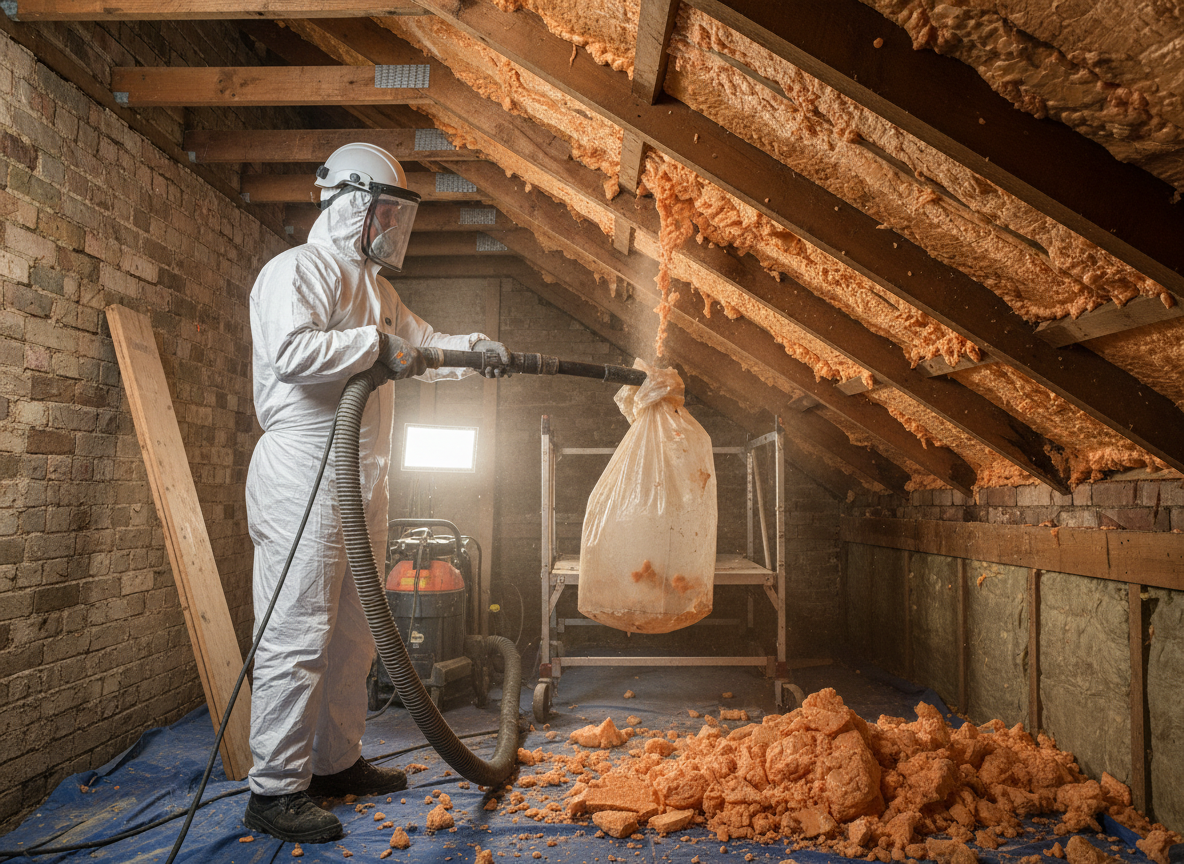
Telford's post-war estates and 1960s-1970s homes often contain closed-cell spray foam installed in lofts and under floors during the 1980s and 1990s. Removing this material requires separating it from timber joists without damaging original roof structures common in areas like Hollinswood and Dawley. Moisture trapped beneath the foam frequently leads to rot in properties exposed to Shropshire's frequent rainfall and cold winters, so inspection of ventilation and timber condition forms the first step on every job.
Edge cases appear regularly in Telford's mixed housing stock where foam was applied over electrical cables or around chimney stacks. These installations create hidden fire risks and complicate extraction because the foam bonds tightly to brickwork and wiring. Local Building Regulations now require clear ventilation paths in roof spaces, meaning any removal must restore airflow that the original foam installation blocked. Homeowners in Madeley and Oakengates often discover the foam only after noticing higher heating costs or musty smells during damp autumn months.
Work in Telford properties demands dust containment because older lofts contain accumulated soot and insulation fibres that become airborne once disturbed. Crews use sealed extraction systems and negative air machines to prevent particles migrating into living spaces below. After removal, the roof void is left ready for new insulation that meets current standards without repeating the trapped-moisture problems seen in many local terraces and semis.
Technician insight
In Telford, the thing that catches most people out with thermal spray foam removal is how often the foam was sprayed right over the original eaves vents in 1970s semis around Hollinswood and Ketley. Once removed you see the blocked airflow that caused the condensation problems they called us about in the first place.
Hollinswood Terrace Loft
Homeowner in a 1960s terrace noticed black mould along ceiling edges after heavy winter rain. Inspection revealed thermal spray foam covering the eaves and trapping moisture against rafters. We extracted the foam in sections, cleared the blocked vents, and restored airflow without disturbing the original timber structure.
How it works
- 1
Initial Loft Inspection
Access the roof space through Telford properties to assess foam depth, adhesion points, and any hidden services or timber damage.
- 2
Containment Setup
Install dust barriers and negative air filtration to protect the rest of the home during removal in older Shropshire housing.
- 3
Foam Extraction
Cut and peel the thermal spray foam in controlled sections while monitoring for wiring, pipes, and structural timbers typical in local post-war builds.
- 4
Void Cleaning and Ventilation Check
Remove residue, inspect for moisture issues caused by Shropshire weather, and confirm restored airflow before leaving the site.
Pricing
Upfront quotes provided after site visit; cost varies with property age, foam thickness, and access in Telford homes.