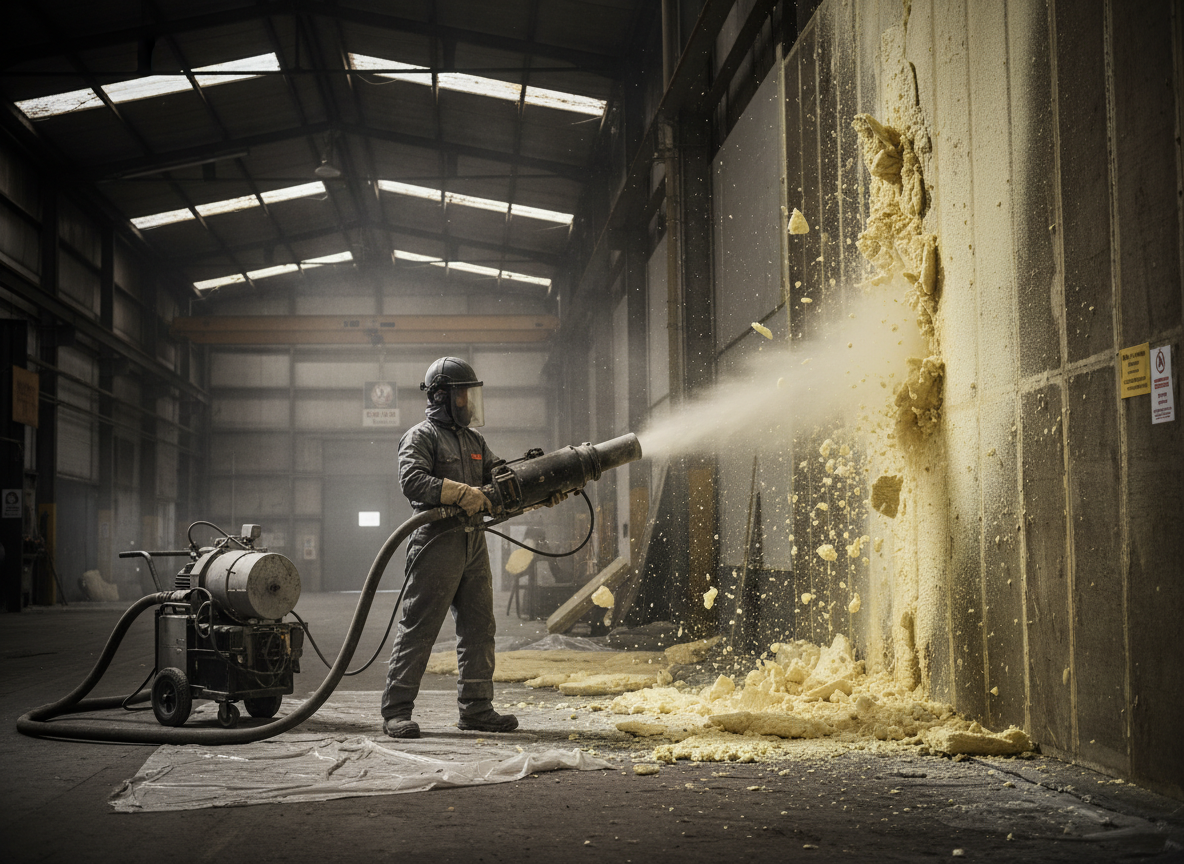
Dry ice blasting removes spray foam by accelerating frozen CO2 pellets that sublimate on contact, lifting insulation without scraping or chemicals. In Telford's 1960s and 1970s housing stock around Hollinswood and Dawley, foam was often sprayed over irregular ceiling joists and electrical runs, creating hidden voids that trap condensation against the roof deck. The method reaches these pockets without disturbing wiring or felt, which matters when properties sit on the clay-heavy soils common in the Telford area that already push moisture upward during prolonged winter rain.
Homeowners in the TF2 postcode frequently discover foam breakdown after loft conversions or when selling, because the original installs predate current ventilation standards. Blasting avoids the vibration that can crack older plaster ceilings below and produces no water, so there is no added drying time in properties where roof spaces stay cold for months. Waste is captured as solid pellets that turn to gas, leaving minimal residue that can be vacuumed on site before the team leaves.
Access constraints in narrow Telford terraces mean equipment must be carried through standard loft hatches rather than craned, so we stage dry ice in smaller volumes and work in sequenced passes. This keeps disruption low for residents who remain in the property while work continues. The process also works around existing pipework and insulation layers that many 1970s builds added later, something abrasive methods would damage.
Technician insight
In Telford, the thing that catches most people out with dry ice blasting spray foam removal is the way 1970s estates around Hollinswood Road often have foam that was sprayed right up to the eaves without proper ventilation gaps, so hidden ice pockets form against the felt and release moisture weeks after the job if you do not open those eaves fully during the blast.
Hollinswood Terrace Loft
Foam in a 1974 mid-terrace had started to sag and trap condensation against the deck. We found the original install had blocked the eaves on both sides. Dry ice blasting cleared the foam in two passes while we kept the existing wiring intact, then we opened the eaves to restore airflow. The loft dried out within a fortnight and the owner could reinsulate without further timber treatment.
How it works
- 1
Initial Loft Survey
We inspect foam depth, joist condition and ventilation gaps from the St James House base before booking the job.
- 2
Protection and Containment
Floors, electrics and stored items are covered; dust sheets and extraction fans are set up to keep the rest of the house clean.
- 3
Dry Ice Blasting
Pellets are fed through the nozzle at controlled pressure, breaking down foam layer by layer until the roof deck and timbers are clear.
- 4
Debris Removal and Final Check
Residue is vacuumed, vents are confirmed clear, and the loft is left ready for reinsulation or inspection.
Pricing
Price depends on loft volume, foam thickness and access difficulty in Telford homes; we assess on site before quoting.