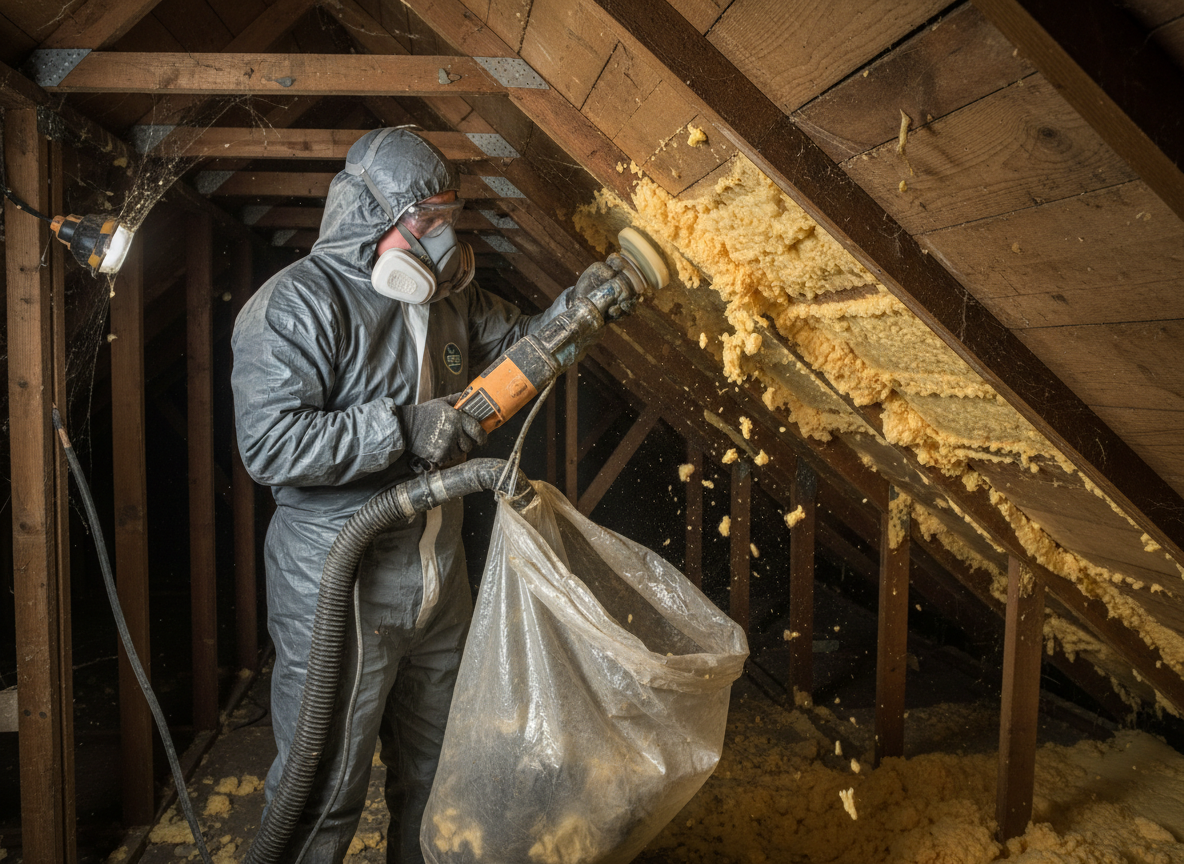
Closed cell spray foam bonds tightly to timber joists and roof decks in many Telford homes built during the new town expansion. Removing it requires cutting through the rigid material without damaging the underlying structure, especially in properties around Hollinswood and Ketley where roof pitches are often shallow. Moisture trapped beneath the foam from Shropshire's frequent rain can weaken rafters, so every job starts with checking for rot before any cutting begins.
Homeowners in the Telford area often discover closed cell foam during loft conversions or when selling, because mortgage lenders now flag it as a potential issue. The removal process must include full extraction down to the original surfaces and proper disposal of the waste, which cannot go into standard skips. Ventilation gaps and insulation replacement are usually needed afterward to meet current building standards in the TF postcode.
Handling Moisture and Timber Damage
Telford's clay-heavy soil and winter rainfall mean roof leaks often go unnoticed under closed cell foam. During removal we check every joist for softening and advise on repairs before new insulation is fitted. This step prevents callbacks when owners later install boarding or electrics.
Waste and Site Protection
All removed foam is bagged on site and taken away for licensed disposal. Dust and debris are contained with sheeting to protect living spaces below, a necessity in the close-set semis common across the Telford new town estates.
Technician insight
In Telford, the thing that catches most people out with closed cell spray foam removal is how the foam fills every gap around the 1970s timber joists in Hollinswood and Ketley houses. Once Shropshire winter moisture gets underneath, the deck starts to soften and you cannot simply peel the foam off without checking every board.
Loft Conversion Blocked by Foam
A semi in Ketley had closed cell foam throughout the loft, preventing new insulation and boarding. We found softened joists where rain had tracked under the foam. After cutting out the material and treating the timber, the owner could proceed with the conversion without further structural work.
How it works
- 1
Initial Loft Inspection
We assess foam thickness, roof condition and access points in the Telford property before any work starts.
- 2
Containment Setup
Protective sheeting and extraction equipment are installed to keep dust out of living areas below.
- 3
Foam Cutting and Extraction
Closed cell material is cut away in sections and removed down to the original timber and decking.
- 4
Timber Check and Cleanup
Joists are examined for rot, surfaces are vacuumed, and all waste is removed from site.
Pricing
Cost depends on loft size, foam depth and any timber repairs required.