2026-10-23 ·
Winter Loft Checks After Spray Foam Removal in Telford
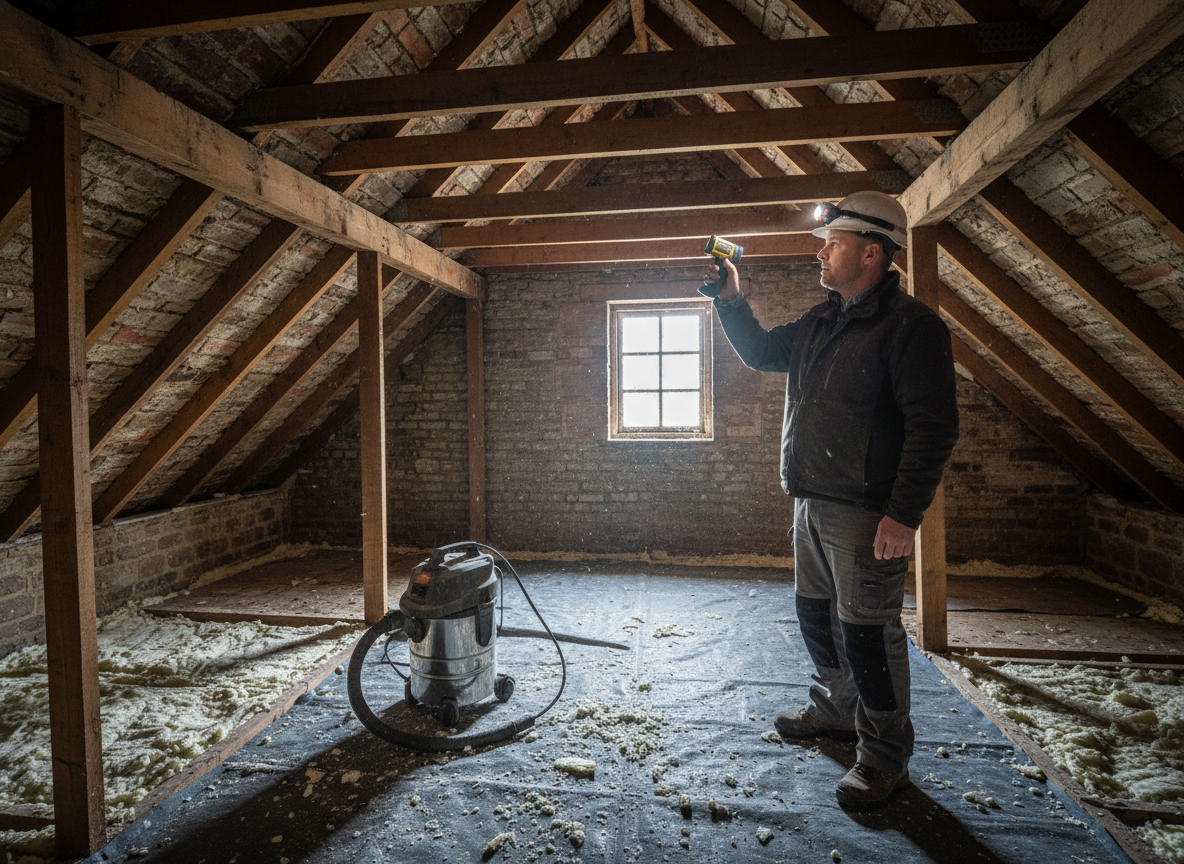
Telford lofts often need close attention once spray foam has been stripped out, especially as winter temperatures drop below freezing and damp air from the Shropshire hills moves through older roof spaces. The first check focuses on confirming that all foam residue is gone and that the original timber and felt are dry before the first frost arrives.
Inspecting Ventilation Paths After Removal
Post-war estates in Telford such as those around Hollinswood and Oakengates commonly have narrow eaves and limited ridge vents that become blocked once spray foam expands. Walk the loft with a torch on a cold morning and look for any remaining closed-cell material that could trap moisture against the rafters. Measure the clear gap at each soffit to ensure at least 50 mm of airflow remains; anything less allows warm air from the house to condense on the cold felt. In Wellington properties with steeper pitches, check that the vent at the ridge has not been covered during earlier insulation work. These steps prevent the black mould streaks that appear on ceiling joists by February in many Shropshire homes.
Spotting Condensation on Roof Timbers
Once foam is removed, bare rafters in Telford lofts cool quickly when night temperatures fall to 2 °C or lower. Run your hand along the underside of the felt during a damp spell and note any areas that feel wet within 24 hours of rain. Pay special attention to the junction where the roof meets the party wall in terraced houses common around Dawley; these spots often collect water that runs down into bedrooms below. If you see white salt deposits on brickwork, moisture has already moved through the structure. Recording these observations on the same day each month gives a clear picture of whether the loft is drying out or still holding water from the removal process.
Checking for New Insulation Needs Before Winter
After spray foam removal many Telford homeowners replace the material with mineral wool rolls cut to fit between 400 mm joists. Lay a vapour control layer on the warm side first, then add 300 mm of insulation to meet current building standards. In homes near Newport where lofts are used for storage, leave a 50 mm service gap along the eaves so air can still move. Avoid blocking the access hatch with extra layers; a simple hinged cover with foam strip keeps heat in the house while allowing occasional checks. These adjustments reduce the risk of ice forming on the underside of the roof tiles during the coldest weeks of January.
Monitoring for Structural Movement in Cold Weather
Timber in Shropshire roofs expands and contracts with temperature swings of 15 °C between day and night. After foam removal, walk the joists monthly and look for new cracks wider than 2 mm around nail plates or ridge beams. In properties served from St James House, Hollinswood Road, owners often notice slight movement in the first winter because the foam had previously stiffened the structure. Note any sagging felt between rafters; this can indicate that water has softened the battens. Early detection allows small fixes before the next heavy snowfall adds extra load.
Regular loft checks after spray foam removal keep Telford homes drier through the winter months. For readers who want more detail on the removal process itself, see the guide on what to expect during professional spray foam removal in Telford. Additional guidance on loft-specific work appears in the loft spray foam removal service page.